Table of contents
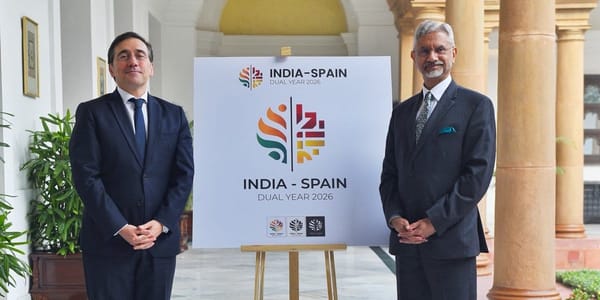
India has welcomed Spain's accession to the Indo-Pacific Oceans Initiative (IPOI), marking a significant step in strengthening cooperation for a free, open, and rules-based Indo-Pacific. Spain's Foreign Minister, Jose Manuel Albares, formally handed over the Declaration of Accession to India's External Affairs Minister, Dr. S. Jaishankar, during his visit to India on January 21, 2026.

Why in the News?
- Accession: Spain officially joined the Indo-Pacific Oceans Initiative (IPOI).
- Diplomatic Exchange: Spanish Foreign Minister Jose Manuel Albares met with EAM Dr. S. Jaishankar in New Delhi.
- India's Stance: India looks forward to collaborating with Spain under the IPOI framework to promote a free and open Indo-Pacific.
- Bilateral Relations: The visit also highlighted the upcoming 70th anniversary of diplomatic relations between India and Spain in 2026.
Indo-Pacific Region
The Indo-Pacific is a crucial geopolitical and geoeconomic construct.
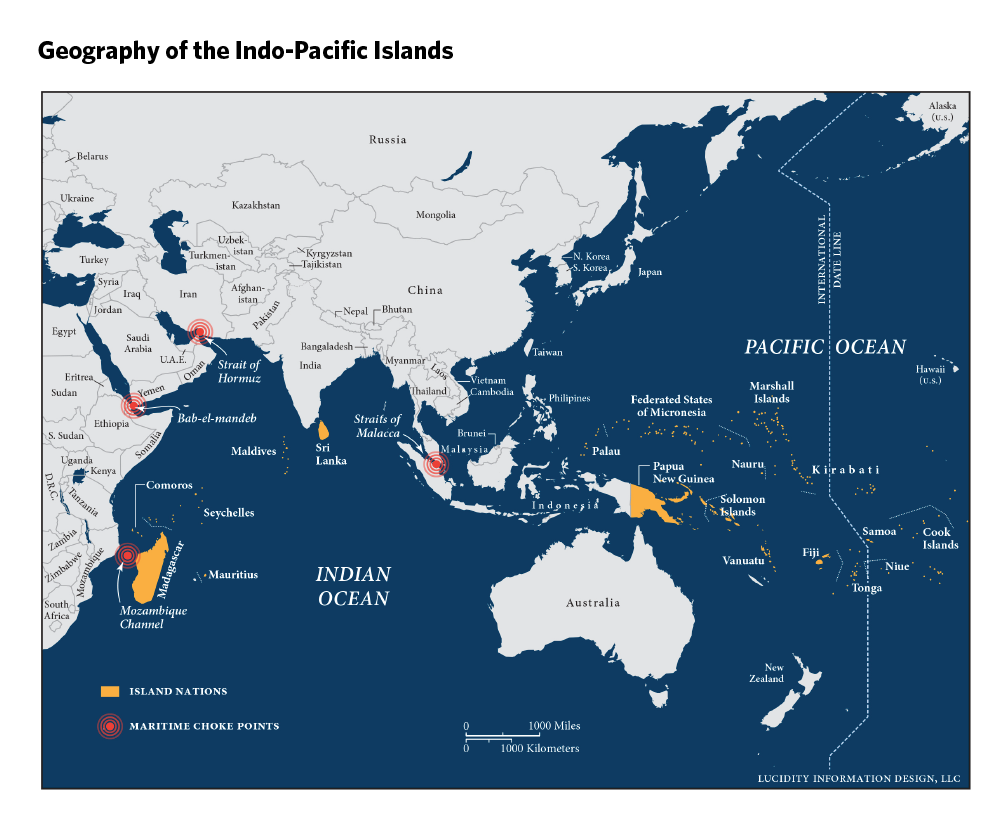
- Definition: It represents an interconnected strategic space spanning the Indian and Pacific Oceans, primarily linked by vital trade routes like the Malacca Strait.
- Significance:
- Home to over half of the world's population.
- Accounts for nearly two-thirds of the global economy.
- A hub for global trade, energy flows, and maritime security.
Indo-Pacific Oceans Initiative (IPOI)
The IPOI is India's vision for a secure and prosperous maritime domain.
Genesis and Background
- Launch: Proposed by Prime Minister Narendra Modi at the East Asia Summit in Bangkok, Thailand, on November 4, 2019.
- Nature: It is a non-treaty-based, voluntary arrangement designed to foster cooperation.
- Foundation: Builds upon India's earlier "Security and Growth for All in the Region" (SAGAR) initiative, announced in 2015, which emphasizes a safe, secure, and stable maritime domain.
Core Pillars of IPOI
The IPOI focuses on seven interconnected pillars to achieve its objectives:
| Pillar | Focus Area |
|---|---|
| Maritime Security | Ensuring safe and secure seas, combating piracy and terrorism. |
| Maritime Ecology | Protecting marine environment, addressing pollution and climate change impacts. |
| Maritime Resources | Sustainable management and utilization of ocean resources. |
| Capacity Building and Resource Sharing | Enhancing capabilities of regional partners, sharing best practices. |
| Disaster Risk Reduction and Management | Strengthening preparedness and response to natural disasters. |
| Science, Technology and Academic Cooperation | Promoting research, innovation, and knowledge exchange. |
| Trade Connectivity and Maritime Transport | Facilitating unimpeded lawful commerce and efficient maritime logistics. |
Key Significance of IPOI
- Rules-Based Order: Promotes a rules-based international order, respecting sovereignty, territorial integrity, and freedom of navigation.
- Countering Assertiveness: Serves as a framework for cooperation to address challenges, including the assertiveness of certain actors in the region.
- Global Convergences: Aligns and converges with other regional and global initiatives, such as:
- AIIPOIP (Australia-India Indo-Pacific Oceans Initiative Partnership)
- AOIP (ASEAN Outlook on the Indo-Pacific)
- IPEF (Indo-Pacific Economic Framework for Prosperity)
- India's Role: Reinforces India's position as a responsible and proactive stakeholder in regional security and prosperity. The Indian Navy plays a crucial role in actualising these pillars.
Spain's entry into IPOI underscores the growing international recognition of the Indo-Pacific's importance and the collaborative spirit required to maintain its stability and prosperity.

Mains Test Series 2026 + Mentorship
Not just a test series but complete guide to Mains Answer Writing