Table of contents
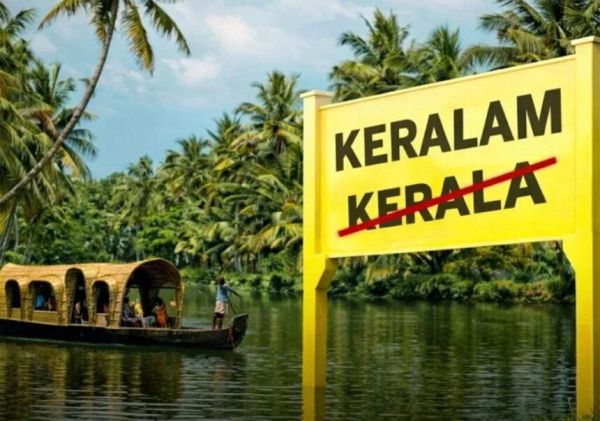
On February 24, 2026, the Union Cabinet, chaired by Prime Minister Narendra Modi, approved the proposal to alter the name of the state of ‘Kerala’ to ‘Keralam’. This decision aims to align the state's official nomenclature with its linguistic roots and the identity recognized by its citizens in the Malayalam language.
Why the Change?
The demand for renaming is rooted in linguistic identity and cultural heritage.
- Linguistic Authenticity: While the state is referred to as ‘Keralam’ in Malayalam, it has remained ‘Kerala’ in official records and other languages since the State Reorganisation Act of 1956.
- Legislative Initiative: The Kerala Legislative Assembly passed two resolutions (August 2023 and June 2024) urging the Centre to amend the First Schedule of the Constitution.
- Uniformity: The goal is to ensure the state is referred to as ‘Keralam’ across all 22 languages listed in the Eighth Schedule of the Indian Constitution.
Constitutional Provisions: Article 3
The power to change the name of a state rests solely with the Parliament under Article 3 of the Indian Constitution.
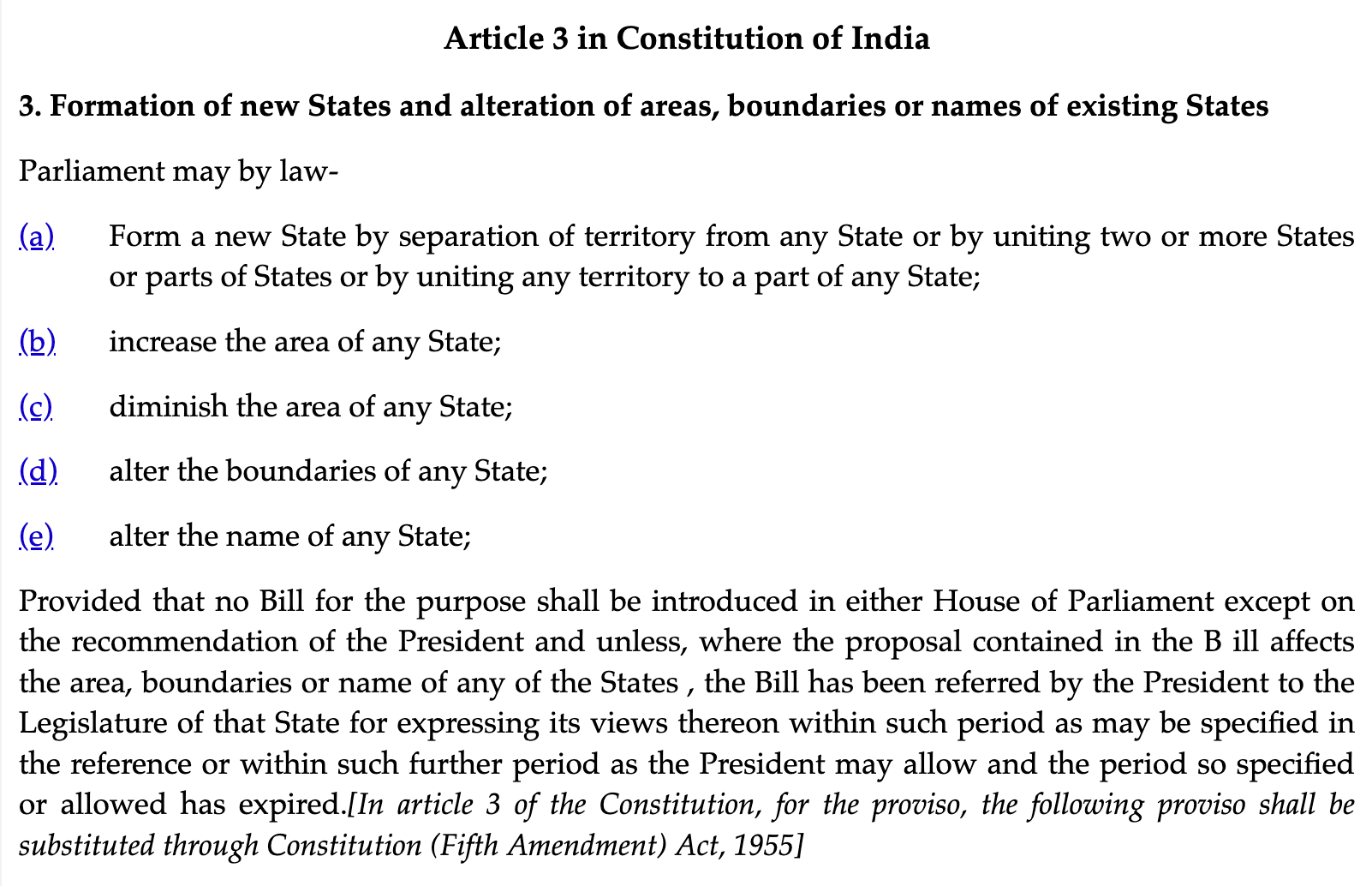
Scope of Article 3:
Parliament may by law:
- Form a new State by separation or union of territories.
- Increase or diminish the area of any State.
- Alter the boundaries of any State.
- Alter the name of any State.
The Procedure for Renaming
The process follows a specific constitutional roadmap to ensure "Indestructible Union of Destructible States":
- Presidential Recommendation: A Bill for renaming can only be introduced in Parliament on the prior recommendation of the President.
- State Views: Before recommending the Bill, the President refers it to the concerned State Legislature to express its views within a specified timeframe.
- Note: The Parliament is not bound by the views of the State Legislature.
- Simple Majority: The Bill must be passed by a simple majority in both the Lok Sabha and the Rajya Sabha.
- Schedule Amendment: Once passed, the First Schedule (which lists the states) and the Fourth Schedule (allocation of seats in Rajya Sabha) are updated. This is not considered a formal Constitutional Amendment under Article 368.
Historical Precedents of Name Changes
India has a long history of renaming states and cities to reflect post-colonial identities and linguistic pride.
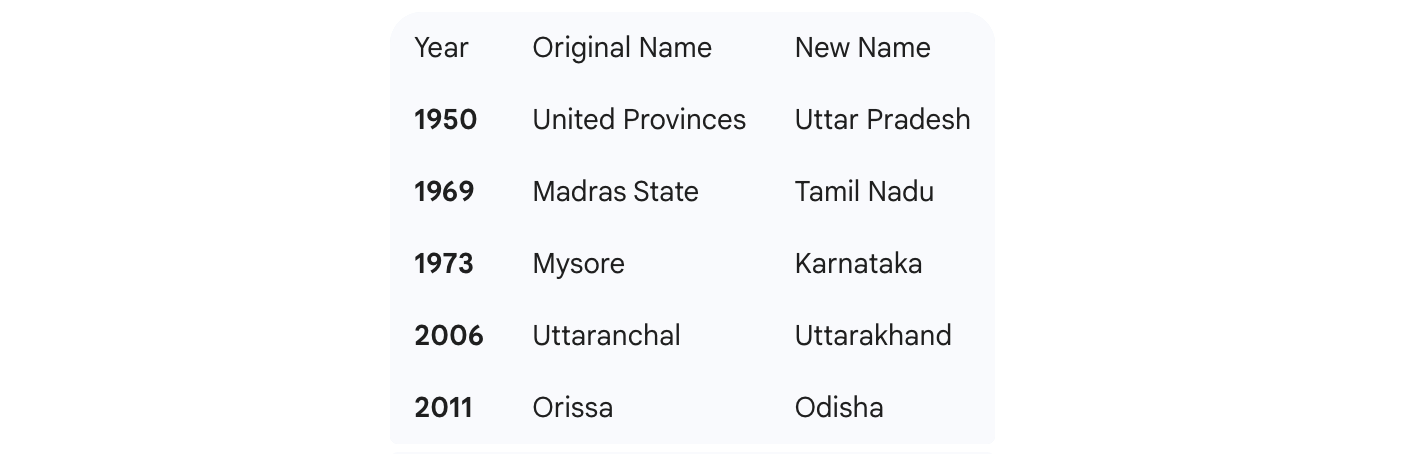
The Case of West Bengal: Why Rejections Happen?
While the Centre has approved Kerala's request, it previously turned down proposals from West Bengal.
- 2011 & 2016 Proposals: West Bengal suggested 'Paschimbanga' and later a trio of names ('Bengal' in English, 'Bangla' in Bengali, and 'Bangal' in Hindi).
- The Rejection Criteria: The Ministry of Home Affairs (MHA) often rejects names if they cause international confusion (e.g., 'Bangla' sounding too similar to 'Bangladesh') or if they lack consensus on a single uniform name across languages.
Next Steps for 'Keralam'
Following the Cabinet's approval:
- The President will refer the Kerala (Alteration of Name) Bill, 2026 to the Kerala Assembly for its formal opinion.
- Upon receiving the views, the Union Government will introduce the Bill in Parliament.
- Once passed and signed by the President, the name 'Keralam' will become official in all Union and State records.
Practice Quiz
1. A Bill for this purpose can be introduced in either House without the President's recommendation.
2. The President must refer the Bill to the State Legislature for its views within a specified period.
Explanation: Recommendation of the President is mandatory under Article 3. The President refers the Bill to the State Legislature to ensure federal consultation, though their views aren't binding.
Explanation: The First Schedule lists names of states; the Fourth Schedule allocates seats in the Rajya Sabha. Both are impacted by the renaming or creation of states.
Explanation: India is an "Indestructible Union of Destructible States." Parliament has the final say in reorganizing the internal boundaries and names of states.
Explanation: Article 4 specifies that changes under Articles 2 and 3 are not deemed amendments under Article 368, requiring only a simple majority.
Explanation: The request was to change the name in all 22 languages recognized under the Eighth Schedule of the Constitution.