
Topic: Role of Women and Women’s Organisation, Population and Associated Issues, Poverty and Developmental issues, Urbanisation, their problems and their remedies.
Q1. With the increase in “the missing women in India’s workforce”, state the causes of low women labour force participation. Discuss measures taken to overcome the same? (15 Marks)
Model Structure
Introduction:
- The LFPR basically tells what percentage of the total women within the working-age are seeking work; it includes both those who are employed as well as those who are as yet unemployed but seeking work.
Main body :
- As the chart below shows, at 21% India has one of the lowest female participation rates in the world.
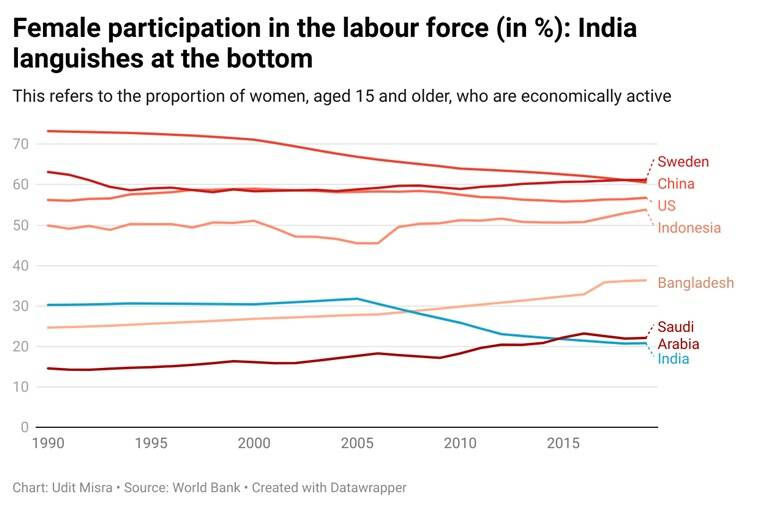
- India’s 21% female LFPR is not even half the global average (47%).
Causes:
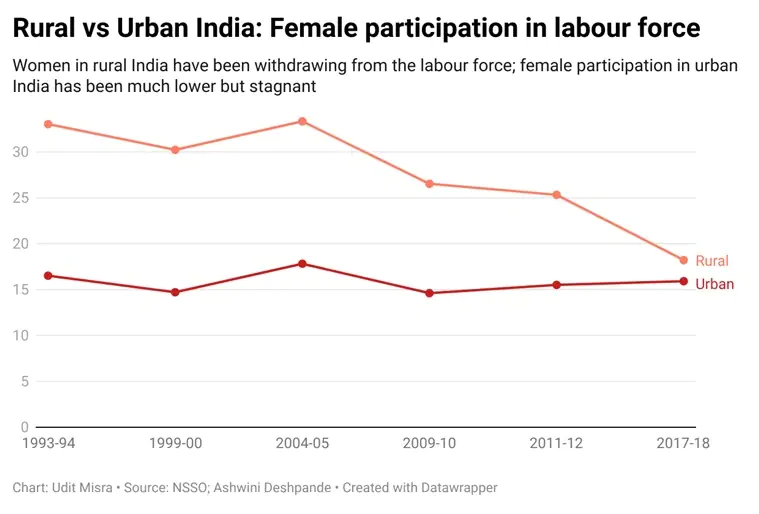
- The EUS – show that women’s LFPR was not always this low. It has fallen over time, especially because of a decline in the LFPR of rural women.
- Employment and Unemployment Survey (EUS)
- Periodic Labour Force Survey (PLFS)
- Marriage: The PLFS states Marriage significantly reduces women’s LFPR.
- In the 21-25 years and 26-30 years cohorts, unmarried women are twice as much likely to participate in the labour force as married women.
- The expectation of household work after marriage negatively impacts women’s participation in the labour force.
- Household constraints and distance trump financial need and individual preference for job choice:
- Women are engaged in agriculture because such jobs fit these needs of flexibility and proximity.
- As India urbanises, labour market opportunities fitting those criteria are in shorter supply, causing women to leave or become unwilling to enter the labour market.
- The National Family Health Survey (NFHS) tells us that Women’s decision-making power in the household is more if they are employed.
- The converse is also true: in households where women have decision-making power, women are more likely to be employed.
- Urban women’s employment grew only marginally, and in sectors with greater exposure to the risks posed by Covid-19.
- The urban FWPR declined from 25 per cent in 1987-88 to 18 per cent in 2018-19, largely driven by rapid increases in urban household incomes and continued pressure of unpaid work and social norms, with families not requiring “secondary income earners”, that is, women to work.
- Women remain concentrated in high-contact sectors (for example textiles) still at risk due to Covid-19 as well as in low-growth, low-productivity sectors (for example agriculture).
- Unemployed people – those looking for work but not finding one – possibly report that they are simply not looking for work, and end up being misclassified as out of the labour force. LFPR may not represent the true size of the labour force in that case.
Way forward:
- Policies: Robust medium-term policies are needed to stimulate demand and supply of female workers in the economy.
- Incentive-based, course-wise gender-based targets for skill training under Skill India mission, along with development of gender-sensitive infrastructure at skill training institutions through steps like mandating separate washrooms, balanced gender ratio of trainers and strict security to bridge gender skill gaps.
- Economic:
- State governments can establish gender-based employment targets for urban public works, while private firms can expand efforts by increasing diversity targets across job roles and seniority levels.
- Governments can offer wage subsidies, especially to micro, small and medium enterprises for hiring women, as well as provide financial support to cover costs of maternity leave and creche facilities. And increasing targets for procurement from women-led enterprises.
- Increasing public investment in the care sector can redistribute the burden of unpaid work and also increase demand for care workers — jobs which can be taken up by women.
Conclusion
- Gender equality reduces violence of all kinds. The beneficial effects of full inclusion for women would be visible at the institutional and national levels, increases transparency and also adds stability for the entire economy.

Missed the PSIR class? Don't worry.
We've opened the first session for everyone. Simply enroll in the FREE PSIR course and get access to watch it.
Q2. Define ‘double burden of malnutrition’ and highlight the current scenario in the context of India. Also, enumerate the steps that can be taken to tackle this menace. (10 marks)
Model Structure
Introduction
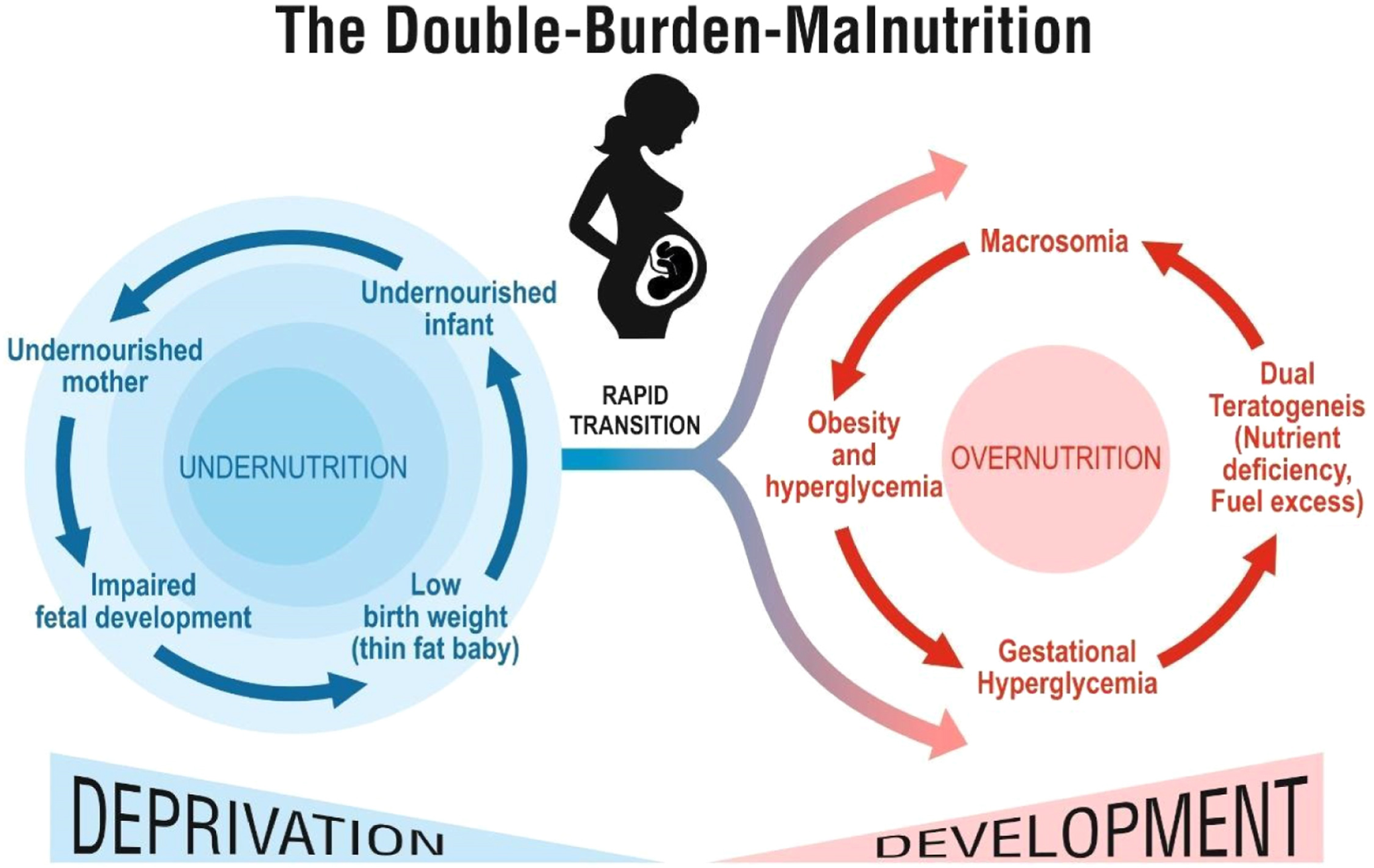
- The World Health Organisation has defined ‘double burden of malnutrition’ as a situation in which undernutrition coexists with overweight and obesity along with diet-related non-communicable diseases.
Main Body
It is measured by body mass index with a value of more than 25 indicating overweight and less than 18.5 indicating underweight. Current status in case of India includes-
- India has the world's largest number of stunted (46.6 million) and wasted children (25.5. million).
- 23% women and 20% men in the age bracket of 15-49 are underweight.
- 2% of the under 5 children are overweight.
- Undernutrition remains disproportionately high in poor regions while obesity is a striking feature of rich regions.
Considering the severity of the issues, steps need to be taken like-
- Striking at the source by taxing high fat, sugar and salt products as evident from examples of Mexico which has shown considerable improvement since taking these measures.
- Further strengthening the mid day meal program to ensure nutrition security. The POSHAN scheme is a step in this direction.
- As per UNICEF recommendation, special attention is needed for adolescent girls, pregnant and lactating mothers, and first 2 years post birth.
- Diversification of Public Distribution System to also include nutritious and fortified food grains.
- Invest substantially in social welfare programmes as India lags far behind when it comes to public expenditure on health and education sectors.
Conclusion
- Every adversity gives an opportunity to bounce back better and develop robust systems to ensure better outcomes. Many steps are taken but their implementation remains the key considering the deadline of sustainable development goals is also coming closer.
Q3. Elaborate on the rising phenomenon of urbanisation by enumerating the multifaceted challenges it poses. Critically evaluate the strategies implemented by the government to address these issues. Also, suggest feasible, forward-looking solutions to effectively navigate the complexities associated with rapid urbanisation. (15 marks)
Model Structure
Introduction
- Urbanisation involves growth of cities and modern infrastructure which is followed by the migration of people from rural to urban areas based on push and pull factors. It involves changes at economic, social, cultural, demographic and technical level. OR
- Urban population is expected to become 40% of total population by 2030 from current 34% (World Urban Prospects (WUP))
Main Body
Challenges due to Urbanisation
- Dilapidated living conditions due to the development of slums and unauthorised colonies.
- They become a hub of communicable diseases and drain natural resources due to improper payment of electricity and water bills.
- Less availability of land and more population for housing means that rent and land prices increase and quality of living decrease due to squatter-type settlements.
- An increased population but stagnant employment opportunities means that unemployment rises.
- Overcrowding manifests in many forms like traffic snarls, competition for education and health services and chaos in case of even minor emergencies.
- An increase in population further increases construction activity, private vehicles and public transport which add to pollution.
- Urban anonymity is a challenging feature which develops as it is not easy to nab petty criminals in high population density areas. This leads to an increase in crime rates.
- Waste collection and dumping, and sewage infrastructure is old and not updated with time. With rapid population growth, there is stress on these systems which manifests in mountains of garbage in the city periphery and open drains which damage aesthetics of a city area.
- Social Inequality: Cities often witness a stark contrast between the rich and the poor, leading to social disparities and issues related to poverty, crime, and health.
Government Initiatives
- Smart Cities mission.
- Swachh Bharat mission for universal sanitation coverage and no open defecation.
- AMRUT or Atal Mission for Rejuvenation and Urban Transformation to provide tap water, sewerage connection to every household, green spaces and public transport.
- HRIDAY or Heritage City Development and Augmentation Yojana to preserve the heritage character of historical cities by improved urban planning.
- PM Awas Yojana for affordable housing to slum dwellers with a timely delivery component.
Forward-looking Solutions:
- Sustainable Urban Planning: Incorporation of sustainable practices in urban planning such as green buildings, renewable energy sources, and efficient waste management systems.
- Public-Private Partnerships: To address infrastructure deficits, partnerships between government and private entities can be encouraged to fund and manage urban projects.
- Social Inclusion Policies: Policies ensuring equal access to services and opportunities, irrespective of socio-economic status, can bridge social disparities.
- Decentralisation: Empowering local bodies to handle urban planning and management, with adequate resources and authority, can ensure customised and effective solutions.
Conclusion
- Urbanisation needs a holistic approach like accessibility to the differently abled, employment to growing population, better infrastructure with green spaces, improved health facilities and affordable education for a sustainable development.
Q4. Examine the impact of urbanisation on urban water bodies and the associated implications. Propose strategies to preserve the integrity of urban water bodies for generations to come. (15 Marks)
Introduction
- Definition-based: Urbanization indeed is the process of becoming urban, moving to cities, changing from agriculture to other pursuits common to cities, such as trade, manufacturing, industry and management, and corresponding changes of behaviour patterns.
- Data-based: According to the 2011 Census, around 31 % of India lived in urban areas. It is projected that by 2036, 38.6 % of Indians will live in urban areas - leading to an increase in demand for water for consumption as well as water pollution.
Main Body
Impact of urbanisation on urban water bodies and associated implications
- The consequences of urbanization on these water bodies include pollution, habitat degradation, reduced water quality, and increased vulnerability to flooding.
- Urbanization often leads to the encroachment and destruction of natural habitats surrounding water bodies. (e.g. lakes in Bangalore)
- Wetlands are drained for infrastructure development, rivers are straightened and concretized, and natural floodplains are built upon.
- These alterations disrupt the natural hydrological cycles, reduce the capacity of water bodies to store and filter water, and exacerbate the risk of flooding during heavy rainfall events.
- Extraction of groundwater and surface water for urban consumption leads to the depletion of water resources.
- Over-extraction can result in the lowering of groundwater levels, saltwater intrusion in coastal areas, and reduced flow in rivers and streams.
Strategies to promote sustainable urban development
- Implementing integrated water management practices that consider the entire water cycle can help mitigate the impact of urbanization.
- Enforcing strict regulations for wastewater treatment, industrial discharge, and solid waste management is crucial.
- Protecting and restoring natural habitats, including wetlands and riparian areas, is essential for preserving the ecological balance of urban water bodies.
- No major development should be permitted in the areas which are subjected to high flooding. Important facilities like hospitals and schools should be built in safe areas. In urban areas, water-holding areas can be created, like ponds, lakes or low-lying areas.
- Reclamation: For example, Mission Kakatiya of Telangana involves the restoration of irrigation tanks and lakes/minor irrigation sources built by the Kakatiya dynasty.
- Educating the public about the importance of urban water bodies, the impacts of urbanization, and individual responsibility in preserving water resources is crucial.
- Strengthening policies, regulations, and enforcement mechanisms related to water management is vital.
Conclusion
- By adopting these strategies, cities can foster sustainable urban development that enhances the quality of life, minimizes environmental impact, and creates resilient, inclusive, and livable urban spaces for present and future generations.
Q5. Analyse the factors contributing to the disproportionate impact of poverty on women in India. Further, suggest strategies to empower women, enhance their economic participation, ensuring inclusive and sustainable development. (15 Marks)
Introduction
- Context-based: The disproportionate impact of poverty on women in India is influenced by a combination of social, economic, and cultural factors. These factors contribute to gender inequality, limited access to resources, and barriers to economic participation.
Main Body
Factors contributing to the disproportionate impact of poverty on women in India
- Gender Discrimination: Deep-rooted gender biases and discriminatory practices perpetuate inequalities in education, employment, and decision-making. (E.g. The stereotype that women ‘belong’ to the ‘kitchen’ only)
- Lack of Education: Limited access to quality education and lower literacy rates among women impede their economic prospects. (E.g. many girls are not sent to school after primary stage)
- Limited Access to Resources: Women in India often face barriers to accessing land, credit, and financial services. (E.g. Many women, despite being financially independent, are not given loans without the signature of their husband or father)
- Unpaid Care Work: Women in India shoulder a disproportionate burden of unpaid care work, including household chores, childcare, and eldercare.
- Social Norms and Cultural Constraints: Traditional gender roles, social norms, and cultural practices shape women's roles and opportunities.
Strategies to empower women, and enhance their economic participation
- Education and Skill Development: Promote vocational training, entrepreneurship development, and STEM education to enable women to participate in a wide range of economic sectors. (Example - Beti Bachao Beti Padhao (BBBP))
- Economic Empowerment Programs: Implement targeted programs that provide financial literacy, access to credit, and entrepreneurship support for women.
- Address Unpaid Care Work: Recognize and redistribute the burden of unpaid care work through policies such as affordable and quality childcare facilities, parental leave, and promoting shared household responsibilities.
- Land and Property Rights: Ensure equal land and property rights for women through legal reforms and awareness campaigns.
- Gender-Responsive Employment Practices: Encourage private and public sectors to adopt gender-responsive policies such as flexible working hours, safe working environments, and maternity benefits.
- Social Awareness and Behavior Change: Launch awareness campaigns to challenge gender stereotypes, promote gender equality, and shift societal attitudes towards women's empowerment.
- Strengthening Social Safety Nets: Expand social protection programs targeting vulnerable women, including widows, single mothers, and marginalized communities.
Conclusion
- By addressing these factors and implementing comprehensive strategies, India can create an enabling environment for women's empowerment, enhance their economic participation, and work towards inclusive and sustainable development.
- Empowered women contribute to stronger economies, improved living standards, and a more equitable society.

GS Advance + Mentorship (for Mains 2027)
Complete coverage of the entire UPSC Mains Syllabus: Advanced level